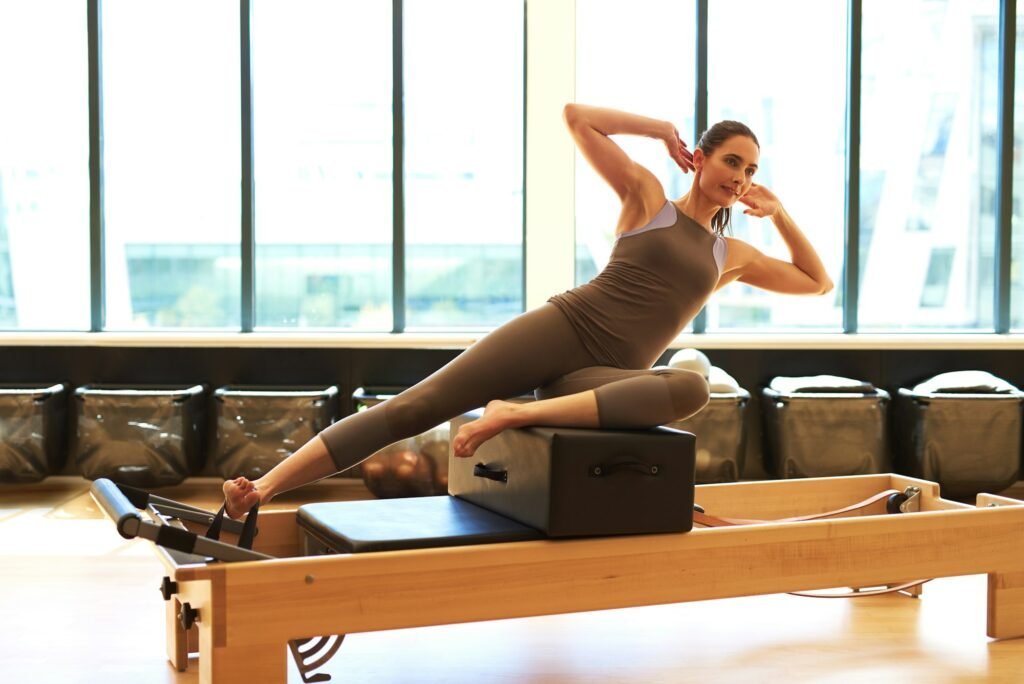

Pilates
Pilates
Pilates is a transformative exercise modality emphasizing precision, control, and deep awareness of the body; it offers a powerful way to cultivate core strength, improve posture, increase flexibility, and achieve overall physical well-being. Created by Joseph Pilates in the early 20th century, it transcends simple exercise, integrating principles of breathwork, mindfulness, and spinal alignment for a holistic approach to fitness.
What is Pilates?
Pilates encompasses the following key elements:
- Core Focus: Every movement engages the “powerhouse” – deep abdominal, back, and pelvic floor muscles for stability.
- Precision and Control: Small, deliberate movements targeting specific muscle groups, not about endless reps.
- Breath Integration: Specific patterns are paired with exercises to enhance core control and mindfulness.
- Whole-Body Movement: Despite the core emphasis, Pilates works muscles head-to-toe, improving functional strength.
- Adaptability: Exercises are easily modified for different fitness levels and those with injuries or limitations.
- Mind-Body Emphasis: Focus on form and internal sensations, making Pilates a meditative form of exercise.
How Can Pilates Help You?
Pilates offers support for a variety of goals, including:
- Strong and Stable Core: Not just about a flat stomach, a strong core is essential for good posture, stability, and efficient movement in everything we do. The core muscles support the spine, pelvis, and hips, allowing them to move through their proper ranges of motion without strain. This translates to better balance and coordination, reducing the risk of falls, especially important as we age. A strong core also improves athletic performance by providing a stable base for all other movements.
- Improved Posture: Poor posture can lead to a cascade of problems, from back pain and headaches to breathing difficulties and digestive issues. Pilates exercises target the postural muscles, those that hold us upright, and teaches proper alignment of the spine, shoulders, and hips. Over time, this can lead to significant improvements in posture, not just how we stand but also how we sit, walk, and move throughout the day. Better posture can boost confidence, make you look taller and leaner, and even improve your mood.
- Flexibility & Mobility: Pilates movements incorporate a full range of motion for the joints, helping to lengthen and stretch tight muscles and improve overall flexibility. This increased flexibility not only feels good but also allows for greater freedom of movement in daily activities, from reaching for that high shelf to bending down to tie your shoes. Improved flexibility can also help to reduce pain and stiffness, and may even help to prevent injuries.
- Injury Rehab & Prevention: Pilates exercises can be a valuable tool for injury rehabilitation and prevention. By strengthening the core and improving balance and coordination, Pilates can help to stabilize the joints and reduce the risk of future injuries. In addition, Pilates can help to improve proprioception, or our body’s awareness of its position in space. This can be helpful in preventing falls and other injuries. If you are recovering from an injury, Pilates can be a safe and effective way to rebuild strength and flexibility and regain your full range of motion.
- Boosted Athletic Performance: The core control, stability, and balance developed through Pilates can translate to improved performance in a variety of sports. A strong core provides a stable base for all other movements, while improved balance and coordination can help athletes to move more efficiently and effectively. Pilates can also help to improve flexibility, which can give athletes a greater range of motion and improve their technique. In addition, the focus on breathwork in Pilates can help athletes to stay calm and focused under pressure.
- Mind-Body Connection: Pilates is not just about physical exercise; it is also about mindfulness and connecting with your body. The focus on breathwork and proper form encourages you to be present in the moment and to pay attention to your body’s sensations. This can help to reduce stress and anxiety, and promote a sense of relaxation and well-being. Pilates can also be a form of moving meditation, a way to quiet the mind and focus on the present moment.
What is Pilates Good For?
Consider Pilates if you’re looking to:
- Relieve Back Pain: Strengthens the support system for the spine, improving daily comfort and function.
- Recover Post-Pregnancy: Safely rebuilds core and pelvic floor strength, easing common postpartum issues.
- Counteract Desk Jobs: Improves posture and mobility to mitigate the detrimental impact of sitting all day.
- Age Well: Maintaining flexibility, core strength, and balance are crucial for safe, independent living as we get older.
- Manage Chronic Conditions: May be beneficial for arthritis, osteoporosis, and other conditions with a doctor’s clearance.
- Enjoy a Mindful Workout: If you find gyms unappealing, Pilates’ slower controlled pace is more appealing for some.
Benefits of Pilates
- Stronger Deep Core: Leads to less back pain, better balance, and improved performance in everything you do.
- Enhanced Body Awareness: Helps you understand your strengths, weaknesses, and how to move more efficiently.
- Improved Posture: Stand taller, look more confident, and reduce aches and pains associated with poor alignment.
- Increased Flexibility: Improves mobility and joint range of motion for less stiffness and better quality of life.
- Stress Reduction: The focus on breath and presence brings a sense of calm and a break from mental chatter.
- Injury Prevention: By balancing strength and flexibility, the body becomes more resilient to everyday strains.
What to Expect with Pilates
- Mat vs. Reformer: Most studios offer both. Mat is just your body, reformer adds spring-loaded resistance, both effective.
- Finding a Teacher: Qualifications vary, look for specialized Pilates training, experience with your specific needs if relevant.
- Small Group or Private: Groups are common, but if new, a few privates to get the form down helps immensely.
- It’s Not Easy at First: Precision takes time, don’t let initial awkwardness frustrate you, everyone goes through it.
- Emphasis on Quality, Not Quantity: Perfecting a few moves matters more than powering through a bunch incorrectly.
Similar Modalities to Pilates
- Yoga: Shares breath focus, but moves more fluidly, less on isolating specific muscles as you do in Pilates.
- Gyrotonic: Also has a core emphasis, but utilizes specialized equipment and spiraling motions, more complex than Pilates.
- Barre: Borrows some Pilates moves, but higher reps, less focus on precision, more cardio element usually.
- Physical Therapy: Pilates MAY be part of PT, but PTs treat specific injuries, while Pilates is more preventative in nature.
Final Thoughts
Pilates offers a unique pathway to achieving optimal physical function. Whether seeking pain relief, athletic improvement, or a more mindful approach to fitness, Pilates’ emphasis on core stability, flexibility, and precision provides a powerful foundation for well-being at any age or fitness level. If embracing a slower-paced, introspective form of exercise appeals to you, exploring Pilates may just unlock a new dimension of strength, poise, and body confidence.
Scientific References
- Cruz-Ferreira, A., Fernandes, J., Laranjo, L., Bernardo, L. M., & Silva, A. (2011). A systematic review of the effects of Pilates method on pain, depression, and quality of life in patients with chronic low back pain. Clinical rehabilitation, 25(7), 596–604.
- Sekendiz, B., CuÄŸ, M., & Korkusuz, F. (2007). Effects of Pilates exercise on trunk strength, endurance and flexibility in sedentary adult females. Journal of Bodywork and Movement Therapies, 11(4), 318-326.
- Wells, C., Kolt, G. S., & Bialocerkowski, A. (2012). Defining Pilates exercise: a systematic review. Complementary Therapies in Medicine, 20(4), 253–262.
Recommended Reading
- Return to Life Through Contrology by Joseph Pilates
- Anatomy of Movement by Blandine Calais-Germain
- Your Healthiest Healthy: 8 Easy Ways to Take Control, Help Prevent and Treat Chronic Illness, and Live Well for Life by Samantha Harris
FAQ: Pilates
I'm not flexible, is Pilates for me?
Absolutely! It IMPROVES flexibility and meeting you where you’re at is what good instructors do.
Do I need special equipment?
For mat Pilates, just a mat! Studios have reformers if you choose that route, cost is then higher.
Is Pilates good for weight loss?
 Indirectly. It builds muscle (which burns more than fat), but for calorie burn, it’s not as vigorous as cardio forms.
Can Pilates replace my other workouts?
Depends on your goals. It’s less cardio focused, so pairing it with walking, etc., may be ideal if overall fitness is the aim.
How often should I do Pilates?
Consistency matters! 2-3x a week is ideal for seeing progress. More or less is OK, depending on your needs.
Related Practitioners
Dr. Natasha Campbell McBride
Put Your Heart in Your Mouth Book
- London, Greater London, England, United Kingdom
Dr. Campbell-McBride's work, particularly the GAPS concept, has been met with both praise and criticism. It's important to consult with… Read More
Ali Campbell
NLP & Hypnosis for Healing
- Dubai, United Arab Emirates
- +1 (555) 123-4567
Ali Campbell is a renowned life coach, NLP (Neuro-Linguistic Programming) practitioner, hypnotist, and life coaching expert. He is widely recognized… Read More

Rita Mustafa
Healing Beyond Boundaries: Personalized Holistic Wellness for You and Your Pets
- City Centre, Windsor, ON, Canada
- +1 (678) 210-5270
Rita’s years experience in the health and Fitness, coupled with her educational background and ongoing activities, have inspired her to… Read More


